This paper reevaluates Elechi Amadi’s The Great Ponds (1969) and The Concubine (1969) within the frames of reference of magical realism and the supernatural, using […]
Category: Religion
Representation of Religious Trauma in Sefi Attah’s Hailstones from Zamfar Kalejaiyek Oluwakemi Abiola and Shogunle Oluwaseyi Nathaniel
The study examines Sefi Attah’s depiction of the psychological burden of women and projects religion as a factor that engenders trauma. This is to identify […]
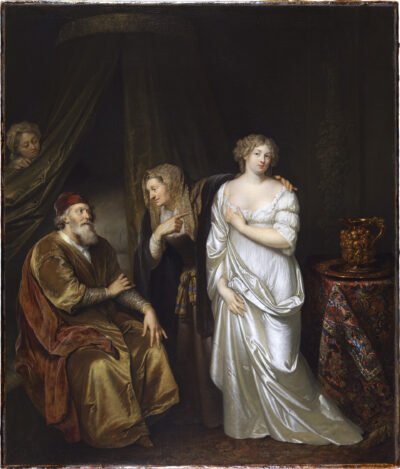
Between the Slavery of the Law and the Freedom of the Promise in Grace: A Semiotic Reading of the Allegory of Sarah and Hagar by Nilthon Fernandes
The article analyses the allegory of Sarah and Hagar as a problem of dual forms of religiosity: serving God out of fear and obligation under […]
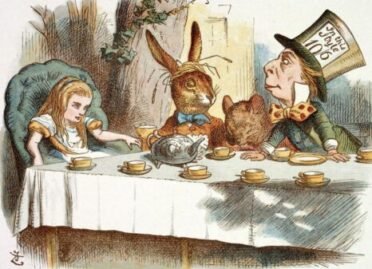
Mythologemes of Death, the Garden, and Time in Lewis Carroll’s Alice in Wonderland by A.Shapauov, Y.Turovskaya, S.Negimov and Z. Talaspayeva
This article explores the mythopoetic elements in Lewis Carroll’s Alice in Wonderland, highlighting the enduring significance of interpreting its mythological dimensions. The study focuses on […]
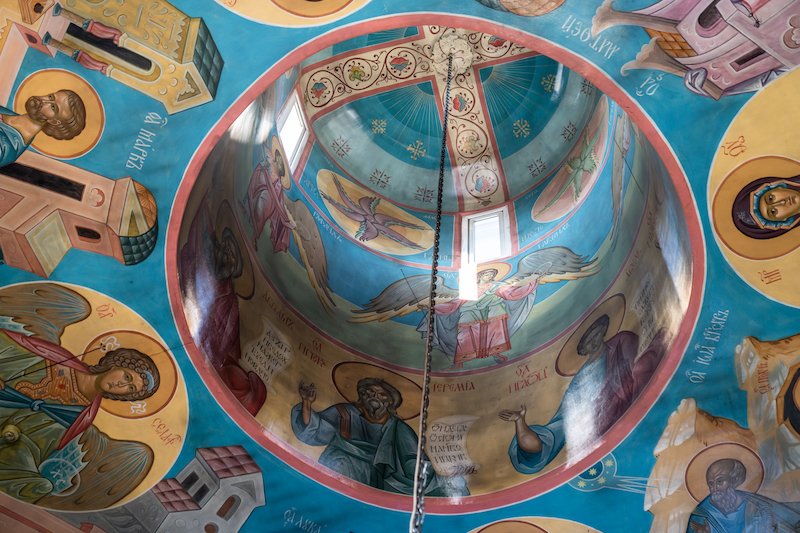
Hidden Semantics of the Painting Program in the Church of the Narva Icon of the Mother of God in Narva by Yuliia Khlystun
The article is devoted to the description and cultural analysis of the program for painting the church in honor of the Narva Icon of the Mother of God in the city of Narva, Estonia
A Semiotic Analysis of Anthropomorphic Conceptions of God in Biblical Verses by M. Mahmud
In biblical context, anthropomorphism is a significant communicative strategy for portraying God. This study examines anthropomorphic conceptions of God in biblical discourse as cognitive constructions […]
Historical Significance of Kogo ogó́ Anthem as a Musical Representation of Unity in the Cathedral Church of Holy Trinity mọfẹ, Southwest Nigeria by O. Asaolu and O. Onabanjo
Music has always played a vital role in religious communities ‘spiritual and communal life, serving as a medium of expression, worship, and unity. In the […]