https://doi.org/10.332.34/JSAR.2.1
pp. 1-26

Faradina
Universitas Lambung Mangkurat, Indonesia
Rusma Noortyani
Sainul Hermawan
Jumadi
Fatchul Mu’in
Universitas Lambung Mangkurat, Indonesia
Abstract – This study re-examines the mystical elements within the Datu legends of the Banjar community in South Kalimantan, Indonesia, not merely as passive folklore, but as active mechanisms for cultural resilience and social order. By critically expanding upon William James’s classic framework of mystical experience (ineffability, noetic quality, transiency, and passivity), this research challenges dominant Western psychological paradigms that isolate mysticism as a strictly individual and transient phenomenon. Using an ethnographic approach in Tapin Regency, the findings demonstrate that within the context of Banjar Islamic syncretism, mysticism operates communally. The analysis reveals how James’s four dimensions are repurposed by the community into a shared epistemology that legitimizes religious authority, enforces moral codes, and drives practical socioeconomic behaviors through rituals such as vows (nazar) and intercession (tawassul). This study advances theoretical discourse in cultural anthropology and the psychology of religion by proposing the concept of “Communal Mysticism,” highlighting how indigenous spiritual frameworks act as dynamic, collective resources to sustain community cohesion amid modernization..
Keywords: Mysticism, Cultural Construction Datu Legends, Ethnography, Indonesia
Introduction
The study of Indonesian folklore and local traditions has frequently been conducted through linguistic or socio-moral lenses (Prabowo, 2025). However, a significant theoretical gap remains in the deep examination of the mystical aspects themselves, particularly concerning how traditional frameworks analyze these phenomena. For over a century, the academic understanding of mysticism has been heavily influenced by William James’s (1902) classic psychological framework, which categorizes mystical experiences through four dimensions: ineffability, noetic quality, transiency, and passivity. While foundational, James’s framework is fundamentally Western-centric, framing mysticism primarily as an isolated, temporary, and deeply individual psychological state.
This study argues that applying such classical frameworks directly to Southeast Asian contexts, specifically the Banjar community, is theoretically insufficient. In the lived reality of the Banjar people, the mystical experiences surrounding Datu figures—such as sacred power (karamah) and miraculous events—are rarely isolated individual phenomena. Instead, they are highly social and communal. Limited academic attention has been given to how mysticism is actively utilized by the community not just for personal spiritual enlightenment, but to construct and maintain collective cultural identity and social order (Yusri & Arbi, 2021; Kolimon & Ataupah, 2025).
To fill this theoretical and empirical gap, this study provides an ethnographic examination of the mystical aspects of the Datu legends in Tapin Regency, South Kalimantan. Rather than discarding William James’s framework, this research critically engages with and expands upon it. The main objective is to transcend the mere categorization of folklore and propose a theoretical advancement: the concept of “Communal Mysticism.” By interpreting qualitative data gathered from local elders, cultural custodians, and religious figures, this study investigates how the four Jamesian dimensions of mysticism are transformed by the Banjar people into a living cultural machine that governs moral continuity, socioeconomic practices (such as nazar or vows), and social cohesion.
This research offers a novel contribution by bridging the psychology of religion with cultural anthropology. It demonstrates that mysticism is not a universal, passive construct, but a culturally embedded, active mechanism. By redefining how sacred stories function as living sociopolitical and psychological practices, this study provides a fresh framework for understanding how indigenous spiritual knowledge systems sustain community resilience against the existential threats of globalization.
Objective(s)
The research will discuss the mystical contents present in Datu legends and critically examine their role in shaping the cultural identity, social order, and religious awareness of the Banjar people in South Kalimantan. Specifically, the research aims to:
- Critically analyze the mystical elements embedded in the Datu legends of Tapin Regency (particularly Datu Nuraya) not merely as folklore motifs, but as active socio-cultural mechanisms.
- Re-evaluate and expand William James’s fourfold framework of mysticism (ineffability, noetic quality, transiency, and passivity) by demonstrating how these dimensions manifest as communal, rather than strictly individual, experiences within the Banjar context.
- Investigate the practical social implications of these mystical narratives, specifically how they legitimize religious authority, enforce moral values, and drive socioeconomic behaviors (e.g., nazar and tawassul) through the lens of “Communal Mysticism.”
- Propose a theoretical advancement in the interdisciplinary study of Southeast Asian folklore and the psychology of religion by offering “Communal Mysticism” as a framework that challenges Western-centric psychological paradigms of spiritual experience.
Literature Review
Mysticism has long been an important topic in the study of religion, anthropology, and cultural studies. In many societies, mystical experiences are understood as encounters with the sacred that transcend ordinary rational explanation. Such experiences often shape religious beliefs, ritual practices, and social values within communities. Scholars of religion have emphasized that mystical phenomena are not merely individual psychological experiences but are also culturally mediated interpretations of the sacred (Chukwudebelu, 2024; Johansson, 2022).These interpretations reflect the complex interplay between individual subjectivities and the broader sociocultural contexts that shape religious experiences (Kellenberger, 2021; Pagis & Winchester, 2021).
One of the most influential theoretical frameworks for understanding mystical experience was proposed by William James in his classic work “The Varieties of Religious Experience”. James identified four defining characteristics of mystical experience: ineffability, noetic quality, transiency, and passivity. According to this framework, mystical experiences are difficult to express in language, convey a form of spiritual knowledge, occur temporarily, and are perceived as happening through a power beyond human control.
In anthropological studies, mystical experiences are often interpreted within broader cultural systems that give meaning to sacred events and supernatural narratives. Rather than being isolated psychological events, mystical phenomena are embedded within social traditions, rituals, and collective memory (Qadir & Tiaynen-Qadir, 2024). In many cultural contexts, sacred figures such as saints, spiritual leaders, or ancestral figures become focal points through which communities interpret mystical experiences and divine intervention.
Within Southeast Asian societies, mystical beliefs are frequently intertwined with religious traditions and local cultural practices (Chen, Guo, & Cowden, 2023; Macaranas, 2021). Stories of sacred figures, miraculous events, and supernatural interventions serve not only as spiritual narratives but also as mechanisms for transmitting moral values and reinforcing communal identity. In this sense, mysticism can be understood as a cultural system that integrates religious belief, social ethics, and collective memory. This integrative approach highlights the dynamic interplay between individual mystical experiences and the broader sociocultural frameworks that shape their interpretation and significance in various communities (Alaei Ardekani & Hamzepour, 2024; Chen, 2024). This perspective emphasizes the importance of understanding mysticism as a multifaceted cultural phenomenon that transcends individual experiences and is deeply rooted in social contexts.This layered understanding of mysticism allows for a more comprehensive exploration of how these experiences manifest across different cultures and their implications for community cohesion and identity formation (Franklin, 1997; MOTYCHAK, 2025). This approach aligns with the proposed layered hierarchy model of mysticism, which emphasizes the significance of cultural mediation in shaping the perception and interpretation of mystical experiences.
Conceptual Framework
This study adopts William James’s (1902) classical framework of mystical experience as a foundational baseline, but critically reconstructs it through an ethnographic approach to culture (Setiawan, 2025; Yusri & Arbi, 2021). While James’s fourfold concept (ineffability, noetic quality, transiency, and passivity) has been widely utilized in Western religious studies to analyze individual psychological states (Benevides, 2021), its direct application to Southeast Asian Islamic traditions requires theoretical expansion. This research proposes the framework of “Communal Mysticism,” assuming that mystical elements in Datu legends are not isolated personal encounters, but shared socio-cultural mechanisms that actively shape the cultural, social, and spiritual identity of the Banjar community (Mansurnoor, 2020).
Within this reconstructed framework, mystical experiences outlined in the Datu narratives (e.g., miraculous transformations, sacred symbolism, and divine interventions) are analyzed not merely as individual cognitive or emotional stimuli (Cole-Turner, 2021), but as active operators of social cohesion and moral order. Through ethnographic interpretation, James’s dimensions are redefined for the communal context: for instance, personal passivity is reinterpreted as collective submission to divine will (tawakkal), which drives practical socioeconomic behaviors such as vows (nazar). Ultimately, this framework demonstrates that mysticism in the Banjar community functions as a dynamic cultural process and a living social contract, rather than a universal, fixed psychological phenomenon (Mansurnoor, 2020; Setiawan, 2025).
Table 1 Variable In the Conceptual Framework
| Analytical Categories (William James’s Dimensions) | Redefined Communal Dimensions in Datu Legends | Cultural Identity & Communal Mysticism (Dependent Variables) |
| Ineffability (experiences beyond rational or verbal expression) | Miraculous narratives perceived as shared karamah (sacred presence). | Legitimization of Religious Authority & Collective Belief: Memperkuat otoritas tokoh spiritual dan mengikat kepercayaan kolektif masyarakat. |
| Noetic Quality (transmission of divine or transcendent knowledge) | Datu figures operating as communal sources of moral wisdom. | Establishment of Shared Epistemology & Moral Order: Menciptakan standar etika komunal dan panduan perilaku sehari-hari bagi masyarakat. |
| Transiency (temporary yet transformative mystical experiences) | Brief miraculous encounters serving as catalysts for ongoing community rituals. | Catalyst for Ritual Continuity & Social Cohesion: Menggerakkan praktik sosial berkelanjutan seperti ziarah dan peringatan haul yang menyatukan warga. |
| Passivity (surrender to divine control and acceptance of supernatural will) | Collective submission (tawakkal) translating into practical, worldly actions. | Mobilization of Socioeconomic Practices: Mendorong praktik nyata berbasis kesepakatan sosial-spiritual, seperti nazar (janji/nadzar) dan tawassul. |
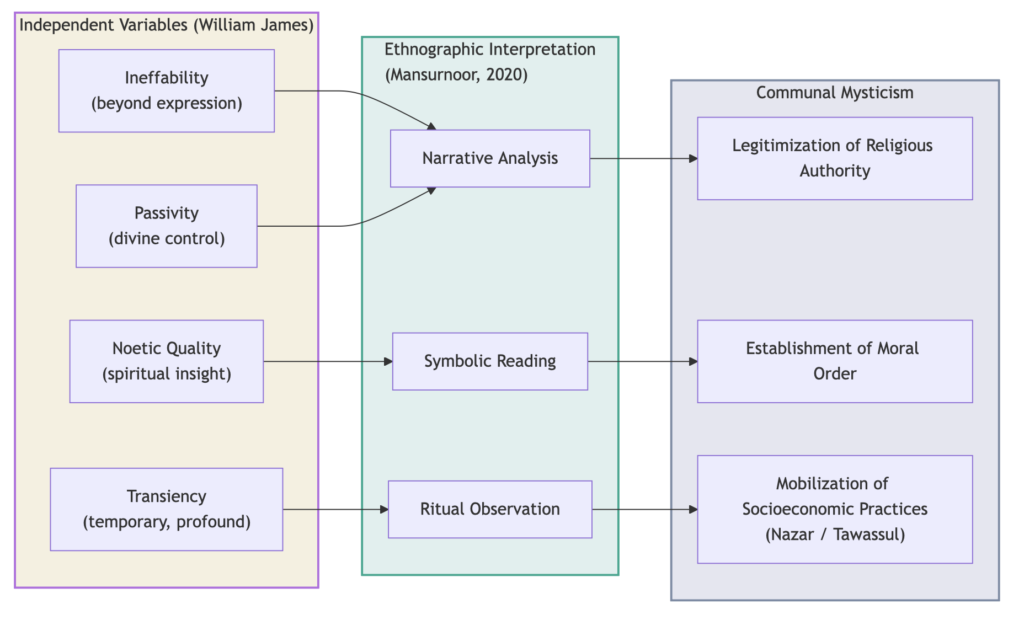
Figure 1 Mapping of Independent and Dependent Variables
As delineated in the conceptual framework (Figure 1), this study demonstrates that the mystical events conveyed within Datu legends are not merely fantastical metaphysical tales, but dynamic, operative cultural forces. By mediating these mystical elements through an ethnographic interpretation, this research proves how these narratives translate directly into tangible communal variables. Specifically, these legends facilitate the Legitimization of Religious Authority, solidify the Establishment of Moral Order, and actively drive the Mobilization of Socioeconomic Practices, such as the enduring rituals of nazar (vows) and tawassul (intercession). Ultimately, this reconstructed engagement transforms mysticism from solely a phenomenon of individual religious psychology into a powerful, collective cultural anthropology mechanism, showcasing how spiritual beliefs are encoded into an enduring, cohesive communal identity.
Research Methodology
- Population and Samples
The sample group of the current study includes the representatives of the Banjar community in the Tapin Regency of South Kalimantan that are fully familiar with the Datu legends. The chosen participants are the local elders, religious figures (ulama), cultural custodians (juru kunci), and storytellers who have either told or directly involved rituals concerning Datu figures like Datu Nuraya and Datu Sanggul. The study used qualitative ethnographic study, which considers the subjective experiences and cultural background of this group of people.
The purposive sampling technique was adopted so that the sample participants would be able to have extensive experiential coverage of the legends and the mystical traditions that go alongside the legends. An ethnographic approach is essential because it allows researchers to understand how the community interprets and assigns meaning to mystical practices and beliefs in the Datu legends. A total number of 15 informants (8 males and 7 females), aged 40-80 years were used in the study. Their varied experiences in religion, education and the local governments allowed them to have a multi perspective on the phenomena being studied.
- Research Instrument
The primary sources of the study were semi-structured interview guide and participant observation field notes that were supported by digital records and photographs. Selection of semi-structured interviews was also a key element of the ethnographic approach that was designed to transcend the responses of the surface, and to explore the subjective, inner, definitions of their experiences, which participants assign to their experiences. This method is accommodative and the researcher gets a chance to pose questions to seek more information without overlooking any significant issues (Kallio et al., 2021). The interview guide was composed of open-ended questions that were aimed at eliciting rich accounts on personal mysticism, the symbolic meaning of local rituals, and personal interpretation of the Datu legends. Such a thorough interview procedure is needed to reveal mystical things that cannot be seen in written material. Digital recorders were used to capture all the interviews to have them properly transcribed.
The second important tool was participant observation and the data recorded in orderly field notes. This method was critical to learn more about the lived aspect of mysticism because the researcher could observe the cultural patterns, habits, and traditions in their practice (Mosse et al., 2023; Wiessner, 2022). Field notes were collected in systematic forms to capture the contextual data on the form of gestures and bodily posture of the participants, the socio-spatial organisation of the ritual spaces (e.g. gravesites), and the symbolic objects witnessed during the traditional rituals. This fact of combination of in-depth interviews and participant observation is one of the essential strengths of critical ethnography as it allows seeing the cultural phenomena in the whole picture (Yarahmadi et al., 2024).
Lastly, the research utilized data triangulation so as to improve the validity and credibility of the results obtained. Data collected through interviews, especially oral accounts, was cross-referenced with data of (1) participant observation field notes and (2) archival data, and local manuscripts, current folklore collections, and religious commentaries. This procedure of validating results with the assistance of various sources of data is an established method of providing rigor in qualitative research (Carter et al., 2024)
- Collection of Data
Data collection took place over a six-month fieldwork period (January–June 2025). During this phase, researchers conducted repeated visits to Tapin villages known for strong Datu traditions, including Margasari, Binuang, and Hatungun. Data were analyzed using thematic analysis to identify patterns related to mystical experience.
The interviews, which were conducted in the Banjar and Indonesian languages and later translated into English, lasted between 60 and 120 minutes. Crucially, these in-depth sessions were designed not merely to document passive folklore, but to critically explore how community members actively utilize Datu narratives to establish moral order, legitimize religious authority, and guide everyday socioeconomic decisions. Participant observation was conducted during pivotal communal ritual occasions, namely the haul of Datu Nuraya (annual commemoration) and ziarah kubur (grave pilgrimage). Rather than simply observing the persistence of mystical belief practices, the observations strategically focused on the social dynamics of these rituals. This provided firsthand data on how individual faith translates into collective actions, such as the communal execution of vows (nazar) and the mobilization of social networks during the pilgrimage. Ethical clearance was officially obtained from the Universitas Lambung Mangkurat Research Ethics Committee. All participants gave informed consent, ensuring profound respect for local customs, community sensitivities, and the confidentiality of sacred knowledge.
- Data Analysis
Data were analyzed through a hybrid approach of reflexive thematic analysis (Braun & Clarke, 2022) and ethnographic interpretation (Madden, 2022). The analytical process followed a pragmatic, four-stage model (Baškarada & Bago, 2021):
- Data reduction — selecting meaningful statements and narratives relevant not only to the mystical elements themselves but, more importantly, to their social and practical applications. This involved moving from raw textual data to initial concepts (Kuckartz & Rädiker, 2023).
- Coding and categorization — Initially, findings were deductively organized using the foundational fourfold framework of William James (ineffability, noetic quality, transiency, passivity) (Byrne, 2022). However, rather than treating these as static psychological endpoints, they were coded as transitional variables to map how the community operationalizes these spiritual experiences.
- Contextual and theoretical interpretation — This stage moved beyond descriptive folklore representation (Madden, 2022). It critically reconstructed James’s individualistic dimensions into the proposed framework of “Communal Mysticism,” interpreting how narratives actively facilitate the legitimization of religious authority, the establishment of moral order, and the mobilization of socioeconomic practices (e.g., nazar and tawassul).
- Verification and triangulation — validating interpretations through two key methods: member-checking with participants (López-Coronado et al., 2024) and cross-comparison with literature, a form of data triangulation (Carter et al., 2024).
To ensure reliability and validity, the study applied the criteria for trustworthiness (Anney, 2024). This included: credibility (achieved through prolonged engagement, triangulation, and member-checking), transferability (through detailed contextual description), dependability (via an audit trail of field notes), and confirmability (maintained through researcher reflexivity).
Results
The discussion established four prevailing mystical dimensions imprinted in Datu legends of South Kalimantan including ineffability, noetic quality, transiency and passivity shown as evidence of how spiritual experience is culturally constructed and socialized in the Banjar society. These dimensions are reflected in ritual practices, moral values, and shared beliefs within the Banjar community, which proves that mysticism functions as a source of cultural identity.
Table 2. Themes and Institutionalized Functions of Mystical Elements in Datu Legends
| No. | Mystical Dimension (William James) | Cultural Expression in Datu Legends | Interpretive Meaning (Ethnographic View) |
| 1 | Ineffability — experiences beyond rational language | Miraculous appearances of Datu Nuraya emerging from light and fragrance during prayer rituals | Such ineffable moments convey the sacred presence (karamah) that defines spiritual authenticity in Banjar belief |
| 2 | Noetic Quality — knowledge revealed through spiritual insight | Oral testimonies describing Datu figures as sources of moral wisdom and divine instruction | Indicates that mysticism functions as a form of local epistemology guiding daily conduct and religious ethics |
| 3 | Transiency — temporary but transformative state of grace | Sudden visions or dreams of Datu Nuraya before major life events | Represents personal spiritual renewal and moral conversion that strengthens individual faith |
| 4 | Passivity — submission to divine will and supernatural power | Pilgrims at Datu graves performing ritual silence and acceptance of fate (tawakkal) | Demonstrates spiritual humility and collective acceptance of divine authority as a cultural virtue |
As detailed in Table 2, this study transcends a mere cross-cultural matching of Datu Legends to William James’s four classical criteria. Instead, it critically reinterprets these dimensions—Ineffability, Noetic Quality, Transiency, and Passivity—to demonstrate how local spiritual phenomena function as active mechanisms of “Communal Mysticism.” This reconstructed paradigm plays a vital role in shifting the academic discourse from individual psychological experiences to collective socio-religious structures.
The ineffability dimension is illustrated through miraculous manifestations, such as the emergence of Datu Nuraya out of light and fragrances during prayer ceremonies. Culturally, this inability to empirically articulate the event serves a profound communal purpose: it establishes karamah (sacred presence). By remaining beyond rational debate, this ineffable quality effectively solidifies the legitimization of religious authority and cements collective belief within the Banjar community.
Secondly, the Noetic Quality (revealed knowledge) manifests in oral testimonies that position Datu figures as absolute sources of moral wisdom and divine instruction. Rather than just historical characters, the Datu serve as living mediums of transcendental knowledge. This positions mysticism not merely as an abstract spiritual sensation, but as the foundational shared epistemology that dictates the establishment of the community’s moral order and everyday ethical behavior.
The third dimension, transiency, is observed in sudden, temporary visions or dreams of Datu Nuraya preceding major life events. While these intermediary states of grace are brief, their sociocultural impact is enduring. Within the communal framework, these transient encounters act as critical catalysts that drive long-term ritual continuity. They transform momentary personal faith into sustained social cohesion, notably ensuring the intergenerational persistence of massive communal gatherings such as the annual haul.
Lastly, the concept of passivity is culturally reinterpreted through the practice of tawakkal (submission to God’s will) during pilgrim rituals at Datu graves. This is not a state of passive inaction; rather, this deep spiritual humility actively mobilizes real-world socioeconomic practices. Driven by collective submission, the community engages in institutionalized commitments such as nazar (vows) and tawassul (intercession), directly linking supernatural authority to tangible socioeconomic cooperation and community welfare.
The narratives centered on Datu Nuraya thus provide profound empirical evidence of mysticism acting as an operative social contract. By synthesizing these oral testimonies and pilgrim practices through a reconstructed Jamesian framework (Table 2), this study elevates the analysis beyond anecdotal or purely descriptive accounts. It offers a rigorous interpretive meaning of the sacred (karamah), demonstrating how local epistemology and spiritual authenticity actively sustain community resilience. These institutionalized communal functions will be further critically examined in the discussion below.
- The Angelic Transformation
Phenomenon 1: “The storyteller (Sahibul Hikayat) mentions that Datu Nuraya was an angel who transformed into human form, sent to save humanity from error by bringing the Kitab Barencong…” (Marwan et al., 2022a)
Rather than merely illustrating an illogical ineffable event, this narrative of angelic transformation functions communally as the ultimate Legitimization of Religious Authority. By framing the Datu’s origin as celestial rather than earthly, the community places his teachings (Kitab Barencong) beyond human critique. This profound passivity—acknowledging a divine origin beyond human control—secures an unquestioned reverence, ensuring that the community remains structurally bound to the spiritual laws he introduced.
- The Sacred Book
Phenomenon 2: “The bearer of the Kitab Barencong (Barencong Book)…” (Marwan et al., 2022a)
The Kitab Barencong represents the tangible Establishment of Moral Order. The mystical, ineffable origins of the book—received through transcendental states rather than academic writing—authenticate its contents as absolute divine wisdom (noetic quality). For the Banjar people, this text is not just a historical artifact; it operates as an active, localized epistemology that harmonizes Islamic theology with indigenous wisdom, continuously guiding daily communal ethics.
- The Supernatural Stature
Phenomenon 3: “Body length and size approximately 60 meters long and 6 meters wide…” (Marwan et al., 2022b)
This extraordinary account of a 60-meter physical stature transcends mere mythological exaggeration; it visually encodes the absolute spiritual supremacy of the Datu. By projecting a scale that defies human rationality (ineffability), the narrative ensures that the moral laws attributed to Datu Nuraya are granted absolute compliance. This structural amplification effectively maintains local social order through a shared sense of sacred awe.
- The Transcendent Body
Phenomenon 4: “When he died and was to be buried, his weight was only like a wisp of cotton…” (Marwan et al., 2022a)
This drastic shift from a giant living stature to a weightless corpse illustrates a deep epistemological lesson (noetic quality) for the community: the supremacy of spiritual purity over material attachment. Culturally, this narrative reinforces the Banjar ethical worldview that true societal value and legacy are built on spiritual closeness to the Divine, not physical or material accumulation. It actively shapes the community’s moral compass regarding mortality and legacy.
- The Intercessory Power (Tawassul)
Phenomenon 5: “Providing or being the cause of someone’s magical ability to lift a grounded ship or an overturned car…” (Informant 1 (Male, 51))
The practice of tawassul to overcome severe physical limitations (e.g., lifting stuck vehicles) is a direct manifestation of the Mobilization of Socioeconomic Practices. This phenomenon proves that the community utilizes mystical power not abstractly, but as an active resource for real-world crisis management. Sociologically, this belief fosters robust community resilience; the grave functions as a practical sanctuary where collective faith mitigates shared physical and social anxieties.
- The Miraculous Rain
Phenomenon 6: “When he was about to be buried, a very heavy rain fell, so the barren land became soft and the dry river filled with water…” (Marwan et al., 2022b)
The sudden rain during a severe drought acts as a powerful catalyst for Ritual Continuity and Social Cohesion. Fulfilling the dimension of transiency, this brief environmental miracle left a permanent sociocultural imprint. It is collectively remembered as a divine sanction of their geographical space, bonding the community to the land and to the Datu, thereby validating the continuous, large-scale communal gatherings at his burial site.
- The Guiding Light
Phenomenon 7: “The community often sees light radiating from the earth around the Munggu Tayuh fortress, rising to the sky…” (Marwan et al., 2022b)
This light appears years after Datu had died, which is why the community found out the place of his previously lost grave. This is discussed as being ineffable (a light rising out of the earth cannot be explained rationally) and noetic (the light is seen as a divine sign, or wahyu, and an indicator that the ground is blessed by God).
- The Vow (Nazar) and Worldly Affairs
Phenomenon 8: “A means of making a vow (nazar) to pay off debts, by renovating and improving Datu’s grave…” ((Informant 3 (Male, 60))
This provides concrete evidence of mysticism acting as a living social contract. The act of pledging to renovate the grave in exchange for debt relief establishes a direct intersection between spiritual submission (passivity) and economic reality. This system of nazar ensures that wealth circulation and community infrastructure development are effectively governed by an internalized, mystical moral order rather than just formal legal structures.
- The Greeting of Respect
Phenomenon 9: “Smoother affairs for a police officer… by giving greetings (salam) when passing his grave…” (Informant 4 (Male, 56))
The institutionalized habit of offering greetings to the grave for bureaucratic success highlights the integration of mystical epistemology into modern professional life. This noetic practice demonstrates that the Establishment of Moral Order transcends the religious sphere into civil administration. It psychologically bridges the gap between secular duties and spiritual obligations, embedding traditional respect into contemporary social mobility.
- The Spiritual Presence
Phenomenon 10: “Able to meet the family of the Prophet (Rasul) who are in Tapin Regency…” (Marwan et al., 2022b)
The belief that the deceased Datu continues to interact with the living descendants of the Prophet connects local Banjar mysticism to the broader, global Islamic lineage. This ongoing spiritual presence (transiency and noetic quality) profoundly elevates the community’s collective identity, validating their local practices on a universal religious stage and reinforcing the absolute legitimacy of their spiritual heritage against the homogenizing forces of globalization.
Discussion
This section synthesizes the findings by interpreting the mystical elements of the Datu legends through a critical socio-cultural lens, moving beyond mere descriptive folklore analysis. The findings unequivocally demonstrate that mystical elements embedded in Datu legends do not merely serve as narrative motifs or isolated psychological events; rather, they function as dynamic, institutionalized mechanisms that actively construct and govern the Banjar community. By ethnographically reconstructing William James’s four classical dimensions, this study advances the theoretical concept of “Communal Mysticism,” proving that spiritual experience in this context is fundamentally a collective, socio-religious operator.
1. From Individual Psychology to “Communal Mysticism”
The primary theoretical advancement of this study lies in its critical expansion of William James’s (1902) framework. Traditionally, the psychology of religion—heavily influenced by Western-centric paradigms—has conceptualized mysticism (characterized by ineffability, noetic quality, transiency, and passivity) as a deeply individual, interior, and often isolated psychological state (Benevides, 2021). However, the ethnographic data from the Banjar community fundamentally challenges this isolationist view.
In the Datu legends, mysticism operates as “Communal Mysticism.” As mapped in the conceptual framework (Figure 1), James’s dimensions are culturally repurposed. The ineffability of miraculous events (such as angelic transformations or supernatural statures) is not left as an abstract mystery; it is institutionalized as karamah (sacred presence), effectively shielding collective belief from modern empirical skepticism. Furthermore, the noetic quality of these narratives transforms individual insight into a shared local epistemology. Consequently, mysticism in the Banjar context is not an abstract experience but a living, collective social contract that shapes how individuals interact with the divine and with each other. This finding shifts the academic understanding of mysticism from a universal psychological construct to a culturally situated, communal imperative.
2. Institutionalizing the Sacred: Authority, Moral Order, and Socioeconomic Mobilization
Beyond cultural construction, the study reveals how Communal Mysticism directly operationalizes the social structure of the Banjar society. The narratives do not merely reflect belief systems; they actively enforce them.
First, the narratives facilitate the Legitimization of Religious Authority. By attributing celestial origins and physics-defying miracles to the Datu, the community structurally elevates his teachings above human critique. This ensures absolute compliance to his spiritual legacy. Second, this unassailable authority drives the Establishment of Moral Order. The Datu operates as a continuous source of moral wisdom, where respect for the sacred governs secular conduct, as seen in the institutionalized habit of greeting the grave for bureaucratic success.
Most critically, this study highlights the Mobilization of Socioeconomic Practices, a dimension often overlooked in traditional folklore studies. The Jamesian concept of passivity—typically understood as psychological surrender—is radically transformed in Banjar culture into tawakkal (collective submission), which drives highly active, practical behaviors. The widespread practice of nazar (vows), such as renovating graves to settle debts, proves that mystical devotion directly mobilizes wealth circulation and communal infrastructure development. Here, the sacred grave functions not just as a religious site, but as a socio-economic sanctuary where spiritual commitments govern material realities.
3. Ritual Continuity and Cultural Resilience
The findings also demonstrate how Communal Mysticism acts as a primary engine for cultural resilience. Despite the homogenizing pressures of modernization, Datu narratives endure because they are functionally adaptive. The Jamesian dimension of transiency—the brief nature of mystical visions or miracles—is culturally leveraged to act as a psychological catalyst. Brief supernatural encounters, such as sudden rain or guiding lights, leave permanent sociocultural imprints that justify and sustain massive, ongoing community rituals like the annual haul and ziarah kubur (pilgrimage).
These rituals ensure that the transmission of local wisdom is not restricted to passive storytelling but is continuously reenacted through collective physical participation. By binding the community to shared geographical spaces and institutionalized practices, Communal Mysticism fosters robust social cohesion, equipping the Banjar people with a dynamic defense mechanism to preserve their intangible cultural heritage.
4. Theoretical Advancements and Global Implications
This study offers a profound theoretical contribution to the global discourse at the intersection of cultural anthropology and the psychology of religion. By explicitly challenging the dominant, individualistic Western perspectives of mysticism, this research introduces “Communal Mysticism” as a necessary framework for analyzing indigenous and Southeast Asian spiritual traditions.
The empirical case of the Banjar Datu legends proves that oral traditions are not archaic relics requiring mere preservation; they are active socio-political and economic frameworks. They legitimize authority, regulate ethical economies through vows, and bind communities against fragmentation. By redefining mystical phenomena as dynamic, culturally embedded operators rather than static psychological events, this study calls for a more pluralistic, context-sensitive approach in global academic scholarship—one that recognizes the profound social utility of the sacred in contemporary society.
Conclusion
This study successfully addresses a critical theoretical and empirical gap in the scholarship of Southeast Asian folklore and the psychology of religion. By critically engaging with William James’s classic fourfold framework of mysticism (ineffability, noetic quality, transiency, and passivity), this research demonstrates that mystical experiences within non-Western contexts cannot be fully understood through strictly individualistic or psychological lenses. Through an ethnographic examination of the Datu legends in the Banjar community of South Kalimantan, this study introduces the concept of “Communal Mysticism”. Within this reconstructed framework, mystical experiences are proven to be culturally embedded, active mechanisms that transcend personal interiority to operate as institutionalized socio-religious forces.
The empirical analysis reveals that the mystical dimensions embedded in the narratives of Datu Nuraya and related ritual practices function as a living social contract and a localized epistemology. First, the ineffable and miraculous accounts serve to legitimize religious authority, protecting shared beliefs from modern empirical skepticism. Second, the noetic quality of the legends translates transcendental insights into an undisputed guidelines for the establishment of moral order. Third, the apparent transiency of mystical visions acts as a socio-spiritual catalyst that ensures long-term ritual continuity and social cohesion, as observed in the intergenerational persistence of massive communal gatherings like the annual haul and ziarah. Lastly, passivity is culturally reinterpreted as collective submission (tawakkal), which dynamically drives the mobilization of socioeconomic practices, particularly through the institutionalized execution of vows (nazar) that govern material actions and community infrastructure development. Ultimately, this research elevates the academic discourse on folklore from passive documentation to an active evaluation of how the sacred operates as an adaptive resource for community resilience and cultural identity preservation against the destabilizing forces of globalization.
Suggestion
Based on the reconstructed framework of Communal Mysticism and the empirical insights generated in this study, the following interdisciplinary recommendations are proposed for cultural scholars, educators, and policymakers:
1. Preservation and Advanced Documentation of Living Rituals
Future preservation efforts by local authorities and institutions must expand beyond the passive textual recording of folklore. Documentation and digitization projects should prioritize the lived and interactive aspects of the tradition, capturing the social dynamics of haul ceremonies, ziarah patterns, and oral testimonies (Sahibul Hikayat). Capturing how personal accounts of karamah (miraculous gifts) actively shape communal solidarity is vital for protecting this intangible cultural heritage from rapid digital degradation.
2. Integration of Local Epistemology into Educational Curricula
Educators and curriculum designers should integrate the structural values embedded within the Datu legends—such as humility, social responsibility, and ethical devotion—into institutional regional studies programs. Rather than framing traditional concepts like tawassul (intercession), nazar (vows), and ziarah (pilgrimage) as obsolete superstitions, the educational framework should treat them as a valid, localized spiritual worldview and a distinct epistemology that governs Banjar social ethics.
3. Development of Community-Based Sacred (Spiritual) Tourism
Policymakers managing cultural heritage sites in regions like the Tapin Regency should develop sustainable spiritual tourism models that prioritize sacred authenticity over commercial exploitation. Management frameworks must actively involve cultural custodians (juru kunci) to ensure that economic empowerment and site development do not compromise the foundational role of these locations as spaces for collective rituals, vows, and spiritual refuge.
4. Recognition of Traditional Mysticism in Community Governance
Community leaders and local government bodies should recognize traditional mystical frameworks as valid instruments of social support and collective resilience. The institutionalized practice of making vows (nazar) to resolve material crises (e.g., socioeconomic anxieties or debt) provides a strong psychological and social safety net. Acknowledging these systems allows for more culturally sensitive public policies that leverage local customs to maintain ethical behavior and enhance social cohesion.
5. Theoretical Expansion and Comparative Interdisciplinary Research
For academic researchers, future investigations should apply the “Communal Mysticism” framework to comparative studies involving other regional mystical traditions across Indonesia and Southeast Asia. While this paper successfully integrated Sufi phenomenology with William James’s psychological model, future studies should incorporate broader symbolic anthropology frameworks (such as Clifford Geertz’s thick description) to further decode the deep structural and utilitarian symbolism embedded within living legends.
6. Strategic Digital Dissemination of Indigenous Knowledge
To engage younger generations who are increasingly disconnected from oral cultures, the profound social and moral lessons of the Datu legends should be popularized through modern digital mediums. Utilizing digital storytelling, ethnographic documentaries, and interactive multimedia can bridge the generational gap. This dissemination must be handled carefully to maintain the sacred essence of the narratives while transforming them into active cultural resources for contemporary identity resilience.
Acknowledgement
The authors would wish to acknowledge that it is through the Universitas Lambung Mangkurat (ULM), Banjarmasin, Indonesia that they were given academic assistance, research facilities and institutional support during the process of completing this study. The local community of Tapin Regency, more so the elders, cultural custodians, and religious figures who so willingly gave their time, stories, and spiritual understanding of Datu traditions and rituals are also sincerely appreciated. The authors also owe their support and mentorship of the research under the Humanities and Cultural Studies program to the Faculty of Teacher Training and Education (FKIP ULM). All reviewers and peers are given a special mention and are due credit that gave constructive feedback that helped improve this manuscript. This study is devoted to the conservation of the Banjar cultural heritage and further research of the mystical and spiritual identity of Indonesia.
References
Achmad Maulidi, Moh. Wardi, & Musleh Musleh. (2023). The Mysticism of Cultural Education in Indonesia: Phenomenological Review of Nyabis in Madura. Fikri : Jurnal Kajian Agama, Sosial Dan Budaya, 8(2), 175–183. https://doi.org/10.25217/jf.v8i2.4020
Alaei Ardekani, M., & Hamzepour, M. (2024). The complexity of beliefs: An interdisciplinary exploration of religion and culture. International Journal of New Findings in Health and Educational Sciences (IJHES), 2(4), 1–11. https://doi.org/10.63053/ijhes.93
Anney, V. N. (2024). Ensuring trustworthiness in qualitative research. Journal of Emerging Trends in Educational Research and Policy Studies, 15(2), 216–224
A’yun, K., & Badrus-Sholeh. (2025). Dissonance in national cultural heritage policy: Shifts toward intangible cultural heritage and community involvement. International Journal of Heritage Studies, 31(1), 1–16.
Baškarada, S., & Bago, P. (2021). A pragmatic approach to qualitative data analysis. Journal of Management Analytics, 8(4), 547–573.
Benevides, B. G. R. (2021). William James and the role of mysticism in religion. Manuscrito, 44(4), 453–488.
Braun, V., & Clarke, V. (2022). Toward good practice in thematic analysis: Avoiding common problems and misconceptions. Qualitative Research in Psychology.
Byrne, D. (2022). A worked example of thematic analysis using a theoretical framework. Nurse Researcher, 29(5).
Carter, N., Bryant-Lukosius, D., DiCenso, A., Blythe, J., & Neville, A. J. (2024). The use of triangulation in qualitative research. Oncology Nursing Forum, 51(1), 54–63.
Chen, Z. J. (2024). Psychology of mysticism: Toward a layered hierarchy model. Archive for the Psychology of Religion, 46(3), 286–298. https://doi.org/10.1177/00846724241255129
Chen, Z. J., Guo, S., & Cowden, R. G. (2023). Enriching the common core of mystical experience: A qualitative analysis of interviews with Daoist monks and nuns. The International Journal for the Psychology of Religion, 33(4), 397–414. https://doi.org/10.1080/10508619.2023.2265267
Chukwudebelu, I. A. (2024). Exploring the dynamic interplay between religion and culture: A multidisciplinary inquiry. Journal of Humanities, Music and Dance, 44, 33–43. https://doi.org/10.55529/jhmd.44.33.43
Cole-Turner, R. (2021). Psychedelic epistemology: William James and the “noetic quality” of mystical experience. Religions, 12(12), 1058.
Cowdell, P. (2014). Ghosts and their Relationship with the Age of a City. Folklore, 125(1), 80–91. https://doi.org/10.1080/0015587X.2013.853516
Franklin, R. L. (1997). Post-constructivist approaches to mysticism. In The innate capacity (pp. 231–245). Oxford University Press. https://doi.org/10.1093/oso/9780195116977.003.0010
Holm, N. (2009). Mysticism and spirituality. Scripta Instituti Donneriani Aboensis, 21, 61–71. https://doi.org/10.30674/scripta.67344
Johansson, K. (2022). Lived religion and mystical experiences. Approaching Religion, 12(1), 132–148. https://doi.org/10.30664/ar.111061
Jurna, & Mutia. (2020). Akulturasi nilai-nilai budaya lokal dan keagamaan dan pengaruhnya terhadap perilaku sosial. Jurnal Ilmiah Sosiologi Agama (JISA), 1(2), 170–180.
Kallio, H., Pietilä, A. M., Johnson, M., & Kangasniemi, M. (2021). Rigour in qualitative research: A focused review and new recommendations for the use of semi-structured interviews. Qualitative Health Research, 31(10), 1899–1912.
Kellenberger, J. (2021). Religious experience and belief. https://doi.org/10.1007/978-3-030-74170-9_8
Kolimon, M. L. Y., & Ataupah, F. N. (2025). Weaving holy communion: A feminist theological study on the relationship between living believers and their deceased family members and ancestors in West Timor. Indonesian Journal of Theology, 13(1), 1–24.
Kuckartz, U., & Rädiker, S. (2023). From textual data to categories and concepts: A systematic comparison of qualitative data analysis methods. Education Sciences, 13(2), 117.
Lestari, G. A., & Wibowo, A. (2025). The role of language in preserving cultural heritage and religious beliefs: A case study on oral traditions in the indigenous Sasak. PIONEER: Journal of Language and Literature, 17(1), 123–134.
López-Coronado, M., Ben-Omran, T., Al-Moraikhi, H., & Al-Maadadi, F. (2024). Member checking in qualitative research: A practical guide. International Journal of Qualitative Methods, 23.
Madden, R. (2022). Ethnography and the global challenge of representation. Ethnography, 23(4), 487–506.
Macaranas, J. R. G. (2021). Understanding folk religiosity in the Philippines. Religions, 12(10), 800. https://doi.org/10.3390/rel12100800
Mansurnoor, I. A. (2020). Mysticism, Sufism, and the dynamics of Islamic spirituality in Southeast Asia. HTS Teologiese Studies/Theological Studies, 76(3), 1–8.
Marinău, A. – R. (2024). Myth, Memory, and Modernity: the Role of Cultural Heritage in shaping Contemporary Spiritual Narratives. DIALOGO, 11(1), 31–44. https://doi.org/10.51917/dialogo.2024.11.1.1
Marwan, M., Mujahid, & Maserani. (2022a). Datu-Datu terkenal Kalimantan Selatan. Sahabat Pustaka.
Marwan, M., Mujahid, & Maserani. (2022b). Manaqib Datu Nuraya. Sahabat Pustaka.
Mosse, D., et al. (2023). The contribution of anthropology to the study of open dialogue. Frontiers in Psychology, 14.
Motychak, Y. (2025). The experience of holiness: Religious tourism in contemporary society. Sophia: Human and Religious Studies Bulletin, 25(1), 19–25. https://doi.org/10.17721/sophia.2025.25.4
Noortyani, R. (2021). Tuturan ritual malabuh pada masyarakat Banjar Kalimantan Selatan. Metalingua: Jurnal Penelitian Bahasa, 19(1), 41–52.
Noortyani, R., Mu’in, F., Munawwarah, R., & Normelani, E. (2023). Ethnolinguistic study of the traditional Indonesian parenting song “Dindang Maayun Anak.” SAGE Open, 13(2).
Pagis, M., & Winchester, D. (2021). Mediating the sacred. https://doi.org/10.1007/978-3-030-78205-4_13
Qadir, A., & Tiaynen-Qadir, T. (2024). De-mystifying mysticism. Religions, 16(1), 10. https://doi.org/10.3390/rel16010010
Permana, R. C. E., & Mulyana, E. (2020). The fading of oral traditions in the disruptive era. Journal of Language and Literature, 20(1), 126–133.
Prabowo, Y. A. (2025). Reformed tradition and local culture. Indonesian Journal of Theology, 13(1), 25–48.
Putra, A. S., & Muttaqin, A. (2024). Cultural heritage preservation through community engagement. Indonesian Journal of Studies on Humanities, Social Sciences and Education, 1(2), 50–59.
Riana, D. R., & Indrawati. (2021). Makna simbol tolak bala dalam masyarakat Banjar. Kindai Etam, 7(2), 133–146.
Sagário, M. C. (2024). A influência das lendas e mitos para a cultura atual e a educação. RCMOS – Revista Científica Multidisciplinar O Saber, 1(1), 1–11. https://doi.org/10.51473/ed.al.v3i1.561
Schille-Hudson, E. B., Weisman, K., & Luhrmann, T. (2024). Rates of Spiritual Experience. https://doi.org/10.31234/osf.io/hke4b_v1
Setiawan, B. (2025). Learning at graves. Culture and Religion, 26(1), 1–19.
Sofjan, D., & Ardhana, I. K. (2020). Community, ecology, and religion. Proceedings of the 4th ICIIS, 1–12.
Thongt, G., & Jitpakdeebodin, P. (2022). Cultural tourism model for sustainable community. Suan Dusit University Humanities and Social Sciences Journal, 18(2), 1–18.
Wiessner, P. (2022). Understanding cultural clusters. Behavioral and Brain Sciences, 45, e180.
Yarahmadi, S., et al. (2024). Applying Carspecken’s critical ethnography method. Nursing Practice Today, 11(1).
Yusri, Y., & Arbi, A. (2021). An ethnography of ‘Mali’ belief. IDEAPHORIA, 2(1), 34–45.