This article examines the phenomenon of dual signs in Christian visual culture from a semiotic perspective. A dual sign is defined as a sign capable of carrying both positive and negative semantic potential depending on context, interpretation, and cultural code.
https://doi.org.10.33234/JSAR.2.6

pp. 148-166
Models of Duality of the Sign in
Christian Visual Culture
Yuliia Khlystun
PhD in Cultural Studies
Narva Museum, Estonia
Yuliia.khlystun@narvamuuseum.ee
Abstract This article examines the phenomenon of dual signs in Christian visual culture from a semiotic perspective. A dual sign is defined as a sign capable of carrying both positive and negative semantic potential depending on context, interpretation, and cultural code. Drawing upon the theories of Charles Peirce, Roland Barthes, Yuri Lotman, and Umberto Eco, the study explores the mechanisms through which signs acquire, transform, and preserve multiple meanings. Particular attention is devoted to the symbolism of the Cross, the Instruments of the Passion, the dragon, the lion, and the skull. The analysis demonstrates that some symbols operate through semantic reversal, while others preserve opposing meanings within a broader interpretative framework. To describe this distinction, the article proposes the concepts of reversible duality and integrative duality. It is argued that the study of dual signs contributes not only to the understanding of Christian symbolism but also to the analysis of contemporary cultural memory, identity formation, and conflicts surrounding the interpretation of symbols.
Keywords: semiotics, dual sign, reversible sign, Christian symbolism, iconography, cultural memory, interpretation, visual culture.
Introduction
In contemporary semiotics, the sign is increasingly understood not as a fixed unit with a stable meaning, but as a dynamic structure capable of internal reversal and multiple interpretations. In this regard, particular attention should be paid to dual or reversible signs—sign formations that are capable of changing their meaning depending on context, cultural code, or the position of the interpreter. The same symbol may simultaneously contain both positive and negative potential, unite opposing meanings, or even transform into its own opposite. Such ambivalence is not an accidental exception but rather a fundamental characteristic of cultural semiosis.
- Definition of the Dual Sign
Classical semiotics does not employ a universally established term such as dual sign. Nevertheless, several related concepts can be found in contemporary scholarship: a sign with dual valence, a sign with positive and negative semantic potential, a context-dependent sign with ambivalent meaning, and a reversible sign—that is, a sign whose interpretation can be inverted depending on the conditions of semiosis.¹
In the present article, the term dual sign will be used in the following sense.
A dual sign is a sign capable of carrying both positive and negative semantics depending on context, interpretant, culture, or situation.² In other words, it is a sign endowed with dual valence: the same sign may be perceived as positive within one system of meanings and negative within another.
This definition corresponds closely to Tim Lomas’s argument that a sign may be evaluated differently depending on its presence, scale, and nature.³ Within the framework of positive semiotics, Lomas demonstrates that one and the same sign may be experienced as positive by one interpretant and negative by another. Consequently, its evaluative status may effectively be “reversed” according to the position of the perceiving subject.
The possibility of assigning positive or negative value to the same sign in different contexts is supported primarily by Charles Sanders Peirce’s conception that the meaning of a sign is never fixed in advance but emerges through interpretation. As summarized in the Stanford Encyclopedia of Philosophy, Peirce’s position implies that “[a sign] can never have a definite meaning.”⁴
The dual valence of signs is also reflected in Umberto Eco’s famous statement that “semiotics is in principle the discipline studying everything which can be used in order to lie,” followed by the observation that “if something cannot be used to tell a lie, conversely it cannot be used to tell the truth.”⁵ This formulation directly demonstrates that a sign is potentially capable of functioning in two opposite modes: truthful and deceptive, and therefore also within positive and negative evaluative frameworks.
Roland Barthes’ semiotic approach similarly demonstrates that a sign cannot be reduced to its denotative level alone but inevitably includes connotative meanings that may be evaluatively opposed.⁶ A sign may denote one thing literally while simultaneously being subject to radically different cultural and emotional evaluations.
Barthes explicates connotation and denotation in terms of orders of signification. The first order of signification is that of denotation, where a sign consists of a signifier and a signified. Connotation constitutes a second order of signification that uses the denotative sign as its signifier and attaches to it an additional signified. Barthes refers to this second-order signifying system as “myth” in his Mythologies.⁷
With regard to Peirce’s semiotics, his theory of the sign presupposes that meaning is formed through the triadic relationship of sign–object–interpretant, while the interpretant itself depends upon context and the reader. Consequently, ambivalence should not be regarded as an exception but rather as a natural consequence of the contextual nature of semiosis.⁸
Yuri Lotman emphasized that meaning arises not within a homogeneous system but at the boundary between different languages of culture. Any act of signification presupposes at least a form of double coding, resulting from the encounter of different modes of organizing meaning.⁹ For this reason, a sign never fully coincides with itself. Its meaning is never permanently fixed but exists as the product of tension between competing interpretations. In this respect, every semiotic sign is potentially reversible: it preserves traces of suppressed or alternative meanings and remains capable of actualizing them within a new cultural context.
A particularly important role in this dynamic is played by tropes. Within the Lotmanian tradition, a trope is understood not merely as an ornamental rhetorical device but as a fundamental mechanism of meaning production. A trope brings together elements that would not ordinarily coincide within conventional logic, thereby generating a new semantic space. Metaphor, irony, symbol, and allegory function as mechanisms of semantic “reversal”: they allow one phenomenon to speak through the language of another, producing effects of duality and semantic displacement. For this reason, the trope may be regarded as one of the principal models of the reversible sign.¹⁰
This logic becomes especially visible in political and ideological semiotics. Numerous cultural symbols possess the ability to radically alter their evaluative meaning depending on historical circumstances.¹¹ A symbol may function simultaneously as a sign of liberation and a sign of violence; a sign of memory and a sign of trauma; a sign of the sacred and a sign of threat.¹² Yet complete fixation of meaning remains impossible. Every sign preserves within itself the potential for reinterpretation, resignification, and reversal.¹³
- Christian Visual Signs
Such an understanding of the sign as an internally dynamic and potentially reversible structure proves particularly productive when applied to church art, where a symbol almost never exists within the confines of a single fixed meaning. Christian visual tradition is built upon a complex system of tropes, metaphors, and multilayered correspondences through which one and the same image may simultaneously point to salvation and sacrifice, glory and suffering, life and death.¹⁴
Moreover, ecclesiastical symbols frequently function as spaces of tension between the sacred and the terrifying, between revelation and mystery. For this reason, a semiotic approach to dual signs allows religious imagery to be understood not as a static bearer of dogmatic meaning but rather as a dynamic field of interpretations in which cultural memory, liturgical context, and historical transformations continuously redefine the significance of the image.¹⁵
As stated in the theological formulations that emerged during the Iconoclastic Controversy, icons are symbols that “constitute a conjoining of the human and divine spheres,” while the Greek term symbolon literally signifies the joining together of separate realities (from sym-ballo [συμβάλλω], “to throw together” or “to unite”). Consequently, Christian symbolism—whether literary, such as Old Testament typology, or visual, such as iconography—is characterized by the union of two parts into a newly conceived whole rather than by an accidental or provisional relationship between sign and referent. Following this union, sign and referent cease to be entirely separate realities.¹⁶
This theological understanding of symbolism differs significantly from many modern semiotic models. In Christian iconography, a symbol is not merely a conventional indicator of something absent; rather, it participates in the reality that it signifies. The relationship between image and prototype is therefore ontological as well as representational [9]. Consequently, Christian visual signs often acquire a depth of meaning that allows them to preserve several semantic layers simultaneously [8].
From a semiotic perspective, Christian imagery operates through the constant interaction of visible and invisible realities. Material forms point beyond themselves while simultaneously retaining their own symbolic integrity [8]. This dual orientation enables ecclesiastical symbols to function as particularly powerful examples of reversible signs, capable of preserving traces of multiple meanings and activating them according to context, ritual usage, and cultural interpretation.
The Christian visual tradition therefore provides especially fertile ground for examining dual signs. The coexistence of suffering and glory, death and resurrection, judgment and mercy, humility and kingship constitutes one of the central principles of Christian symbolic thought. Consequently, many ecclesiastical images reveal a remarkable capacity for semantic inversion, transformation, and reinterpretation across historical periods.
3. The Cross and the Instruments of the Passion as Examples of Dual Signs
The cross is perhaps the most striking example of a sign with a reversible interpretation in the history of culture. Within the Roman world, the cross functioned primarily as an instrument of disgraceful execution—a sign of humiliation, suffering, and death. Crucifixion was reserved for slaves, rebels, and criminals; it symbolized the exclusion of an individual from the human community itself. Semiologically speaking, the cross originally belonged to the semantic domain of horror, shame, and curse.
Within Christianity, however, a radical inversion of meaning takes place. The sign of death becomes the sign of victory over death; the sign of execution becomes the sign of salvation; the symbol of disgrace becomes the symbol of glory. Christianity does not abolish the negative meaning of the sign but transforms it from within.
This reversal is inseparable from the central Christian doctrine of the Incarnation and sacrificial redemption. The cross comes to be understood not as an accidental instrument of killing but as the cosmic point of intersection between the human and the divine. Its vertical axis unites heaven and earth, while its horizontal axis unites humanity and the world, the personal and the historical, individual suffering and the universal destiny of humankind. In this sense, the cross becomes an archetype of the reconciliation of opposites: life and death, time and eternity, matter and spirit.¹⁸
For this reason, the cross gradually developed into a universal sign of the sanctification of the world. Through the sign of the cross, spaces are blessed, water is consecrated, baptisms are performed, and prayers and liturgical services are initiated. A sign once associated with violence becomes a sign of divine grace and presence.
As expressed in the liturgical tradition:
“The Cross is the guardian of the whole world; the Cross is the beauty of the Church; the Cross is the might of kings; the Cross is the confirmation of the faithful; the Cross is the glory of angels and the wounding of demons.”
At the archetypal level, the cross derives from much older symbolic structures. The intersection of the vertical and horizontal axes appears in numerous cultures as a model of the cosmos, the axis mundi, or the sign of the world’s center. The vertical line traditionally signifies ascent, spirit, heaven, and transcendence, whereas the horizontal line signifies earthly existence, human society, and history. Their intersection forms a sacred center—a point at which different levels of reality become capable of communication.
For this reason, the Christian cross was able to absorb a vast range of earlier archetypal meanings: the Tree of Life, the cosmic axis, the solar symbol, the four cardinal directions, and the center of the world. Within Christianity, however, these universal symbolic structures acquire a new meaning through the concepts of voluntary sacrifice and victory over death.
From a semiotic perspective, it is especially significant that the cross preserves the memory of its original negativity. Unlike many symbols, it never completely loses its tragic dimension. The cross remains a sign of suffering, martyrdom, and death, and precisely because of this its positive meaning acquires exceptional depth. Salvation becomes inconceivable without sacrifice; resurrection becomes impossible without crucifixion.
The cross therefore constitutes a genuinely dual sign. Death and life, terror and hope, sorrow and triumph coexist within a single symbolic structure. Its power emerges not through the elimination of opposites but through their simultaneous preservation within one image.
It is perhaps for this reason that the word cross continues to evoke predominantly positive—or at least profoundly meaningful—associations for many people today. Over the centuries, culture has gradually recoded this sign through liturgy, art, architecture, embodied practices, and collective memory. The cross has become associated with protection, fidelity, sacrifice, love, and inner strength.¹⁹ Even within secular culture it continues to preserve an archetypal connection with the ideas of meaning, endurance of suffering, and the possibility of inner transformation.
In this respect, the cross represents one of the most powerful examples of how culture can radically reverse the meaning of a sign, transforming a symbol of death into a symbol of hope and new life.
4. The Instruments of the Passion as Dual Signs
The semiotic “reversal” of meaning becomes particularly evident in the Christian perception of the Instruments of the Passion (Arma Christi)—the crown of thorns, the spear, the nails, the reed with the sponge, the ladder, the purple robe, and other objects associated with the Crucifixion.
In their original context, all of these objects belonged to the semantic sphere of humiliation, violence, and bodily torment. The crown of thorns functioned as a parody of a royal crown; the reed served as a mockery of a kingly sceptre; the purple robe represented a derisive imitation of imperial vestments. The nails and spear were literal instruments of torture and death.
Within Christian tradition, however, these objects gradually lose their exclusively punitive significance and become sacred signs of redemptive sacrifice.
From a semiotic perspective, the same process occurs here as in the case of the cross, though in an even more paradoxical form. Not only the principal symbol of the Crucifixion but even the individual instruments of suffering become sacralized. Christian consciousness effectively “reverses” the very materiality of violence by reinterpreting it through the concepts of voluntary sacrifice and victory over death.
Consequently, the spear comes to be perceived not merely as a weapon but as a sign of the revelation of the mystery of the blood and water flowing from Christ’s side. The nails become signs of humanity’s spiritual attachment to Christ. The crown of thorns is transformed into an image of suffering transfigured into royal dignity. Objects originally intended for humiliation become signs of glory and holiness.
Within Christian culture, the Instruments of the Passion acquire profound liturgical and mystical significance. They come to be regarded as material witnesses to the event of Redemption and therefore as objects worthy of particular veneration. Unlike ordinary historical artefacts, relics associated with the Passion are understood not merely as reminders of the past but as bearers of an enduring sacred presence.²¹
For this reason, representations of the Instruments of the Passion were frequently placed alongside the cross in Byzantine tradition, forming part of a unified semiotic complex centered on the memory of the Sacrifice. These signs were intended not merely to communicate information but also to draw the believer into spiritual participation in the Passion of Christ.
The use of the Instruments of the Passion within monastic culture is especially revealing. Their depiction on the paraman—a distinctive monastic garment worn beneath the outer clothing—provides a particularly vivid example. The paraman, bearing images of the cross and the Instruments of the Passion, functions as a sign of continual inner co-crucifixion with Christ.
In this context, the symbol is no longer merely contemplated but comes into direct contact with the body itself. The monk literally wears the signs of suffering as a reminder of spiritual struggle, self-denial, and imitation of Christ. Nails, the spear, and the crown of thorns consequently become symbols of the ascetic path and voluntary spiritual labor.
That which causes death simultaneously becomes an instrument of salvation. This logic is profoundly paradoxical and therefore exceptionally powerful from a symbolic perspective. Christianity does not erase the memory of suffering; rather, it incorporates suffering into a broader structure of hope and transformation. It is precisely for this reason that the Instruments of the Passion evoke not horror but reverential awe in the believer: they are perceived as signs of ultimate love manifested through suffering and sacrifice.
The psychological dimension of symbolic meaning is vividly emphasized by Anthony Robbins:
“What has a greater impact—the word ‘Christian’ or the word ‘cross’? If you’re like most people, the word ‘cross’ has more power because it immediately evokes positive feelings. In essence, it is nothing more than two intersecting lines, yet it has the power to connect millions of people to a particular standard of behavior and way of life. Now take that same cross, bend it into the shape of a swastika, and compare it with the word ‘Nazi.’ Which has the greater negative impact? Again, if you are like most people, the swastika will trigger stronger feelings and do so much more quickly than the word itself. Throughout history, symbolism has been used to evoke emotional responses and thereby shape human behavior. Symbols can take many forms: images, sounds, objects, actions, and, of course, words.”²⁰
This observation demonstrates that the emotional power of a sign frequently exceeds that of verbal description. Through repeated cultural coding, symbols become condensed carriers of collective memory, emotional experience, and ideological meaning. The cross and the swastika represent two particularly striking examples of how visual signs can accumulate radically different evaluative charges and exert immediate influence upon perception and behavior.
5. The Dragon as a Sign with Reversible Interpretation
A similar process of semiotic reversal can be observed in the transformation of the dragon within Christian culture.
In biblical and early Christian tradition, the dragon is predominantly associated with chaos, demonic forces, and opposition to God. In the Book of Revelation, the dragon is explicitly identified with Satan, the “ancient serpent,” who wages war against the Church and the saints. Within this symbolic framework, the dragon functions as an embodiment of evil, destruction, and cosmic disorder.
As Christian symbolism developed, however, the image acquired a considerably more complex and ambivalent character.
The defeated dragon gradually came to signify not only evil itself but also victory over evil. For this reason, dragons appear frequently in the iconography of warrior saints, most notably Saint George the Victorious, the Archangel Michael, Saint Theodore Tyro, and others. In these images, the dragon is no longer merely a monster but becomes visual evidence of the triumph of divine order over chaos.
Particularly significant is the fact that the dragon continues to operate simultaneously within two opposing symbolic registers in Christian culture.
On the one hand, it retains its original meaning as an image of demonic threat, sin, paganism, and destructive force. On the other hand, the same image may be incorporated into a symbolic language of authority, victory, and spiritual domination.
In Byzantine and post-Byzantine traditions, representations of serpents and dragons occasionally appear in decorative elements of ecclesiastical art, on episcopal objects, and within ornamental programs as symbols of conquered power, subdued chaos, or authority over evil.
For example, in many Bulgarian Orthodox churches, both ancient and modern, one can find images of the dragon on the iconostasis and the bishop’s stasidia. The dragon has become the symbol of the bishop (Fig.1, fig.2).
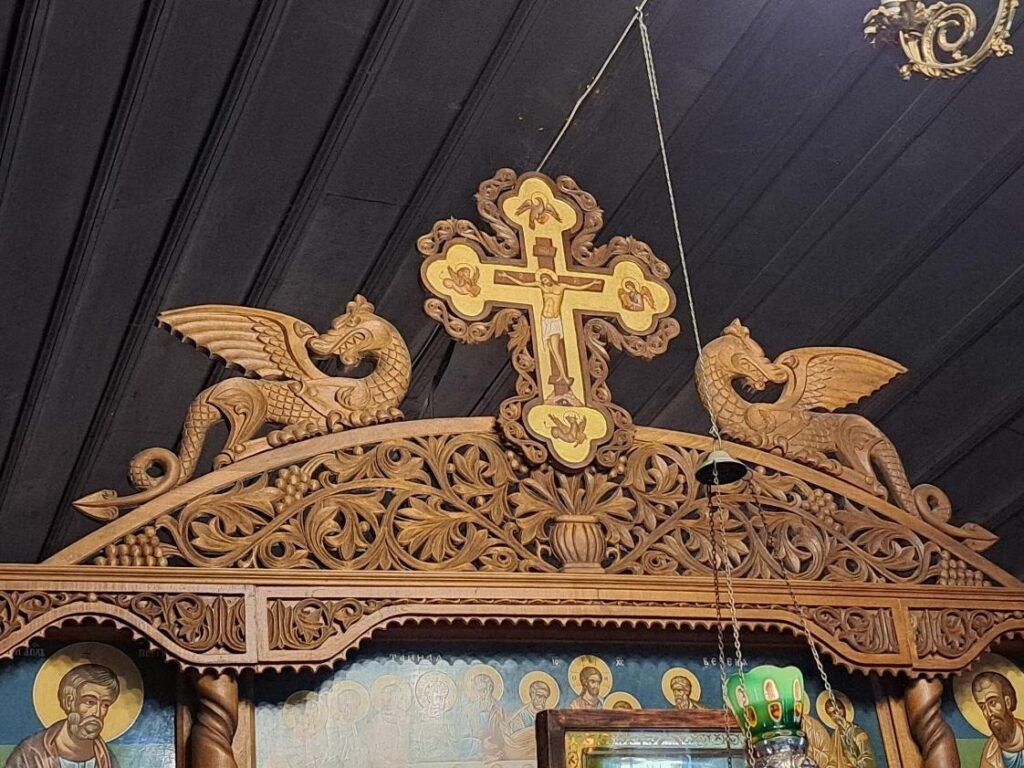
Fig.1 The top of the iconostasis of the church in the Monastery of Saints Constantine and Helena (Varna, Bulgaria)
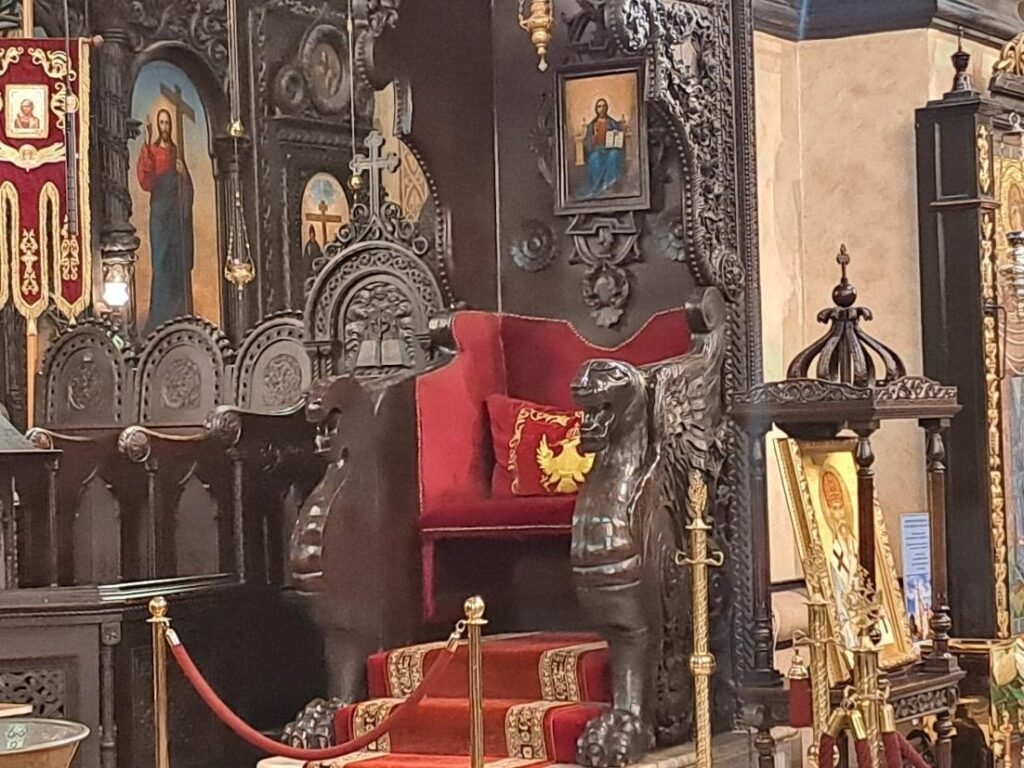
Fig.2 Bishop’s stasidia in the Assumption Cathedral in Varna, Bulgaria
Thus, the sign never completely abandons its original meaning. The earlier semantic layer remains present within the newer interpretation, creating a complex structure of semiotic tension.
It is precisely this internal memory of the sign that makes further reversals possible. From a semiotic perspective, a sign is never permanently fixed. As demonstrated by Lotman, Laclau, and contemporary theories of discourse, every symbol preserves traces of earlier interpretations and remains capable of reactivating them whenever the cultural context changes.
Consequently, a sign that has once been reinterpreted positively may later come to be perceived once again as threatening or destructive.
This constitutes one of the fundamental characteristics of cultural symbols: they do not exist as static emblems but as arenas of interpretative struggle.
6. The Lion as a Dual Sign
The image of the lion in Christian semiotics represents one of the most vivid examples of a dual and reversible sign. Unlike symbols whose meanings remain relatively stable, the lion has, since antiquity, united opposing semantic poles: kingship and ferocity, protection and threat, life and death. For this reason, Christian tradition has been able to employ the lion simultaneously as a symbol of Christ and as an image of the devil.
Such duality was not perceived as contradictory. On the contrary, it reflected the very principle of symbolic thought, according to which meaning is determined by context, by the direction of force, and by the manner in which that force is spiritually interpreted.
The positive meaning of the lion derives primarily from the ancient archetype of the king of beasts. In biblical tradition, the lion is associated with strength, majesty, victory, and legitimate authority. In the Book of Revelation, Christ is referred to as the “Lion of the Tribe of Judah,” emphasizing His messianic dignity and royal nature.
Early Christian commentators also perceived the lion as a symbol of resurrection. Medieval bestiaries preserved the belief that lion cubs were born lifeless and brought to life on the third day through the breath of their father. This legend was reinterpreted as a prefiguration of Christ’s Resurrection.
Furthermore, the lion was believed to sleep with its eyes open, making it an image of divine vigilance and omniscience. Consequently, in church art the lion frequently became a symbol of Christ’s power, spiritual authority, victory over death, and royal dignity.
Yet the same symbol acquires an entirely opposite meaning in other contexts. In the First Epistle of Peter, believers are warned that “your adversary the devil prowls around like a roaring lion, seeking someone to devour.”
Here the lion becomes an image of destructive power, fear, violence, and predatory domination. If, in the first case, leonine strength is directed toward salvation and protection, in the second it is interpreted as a force of chaos and spiritual destruction.
For this reason, medieval iconography occasionally depicts lions as threatening creatures at the feet of saints or as symbols of pride, wrath, and the demonic dimension of earthly power. In certain ascetic writings, the lion becomes a metaphor for passions that seek to tear the human soul apart. (Fig.3)
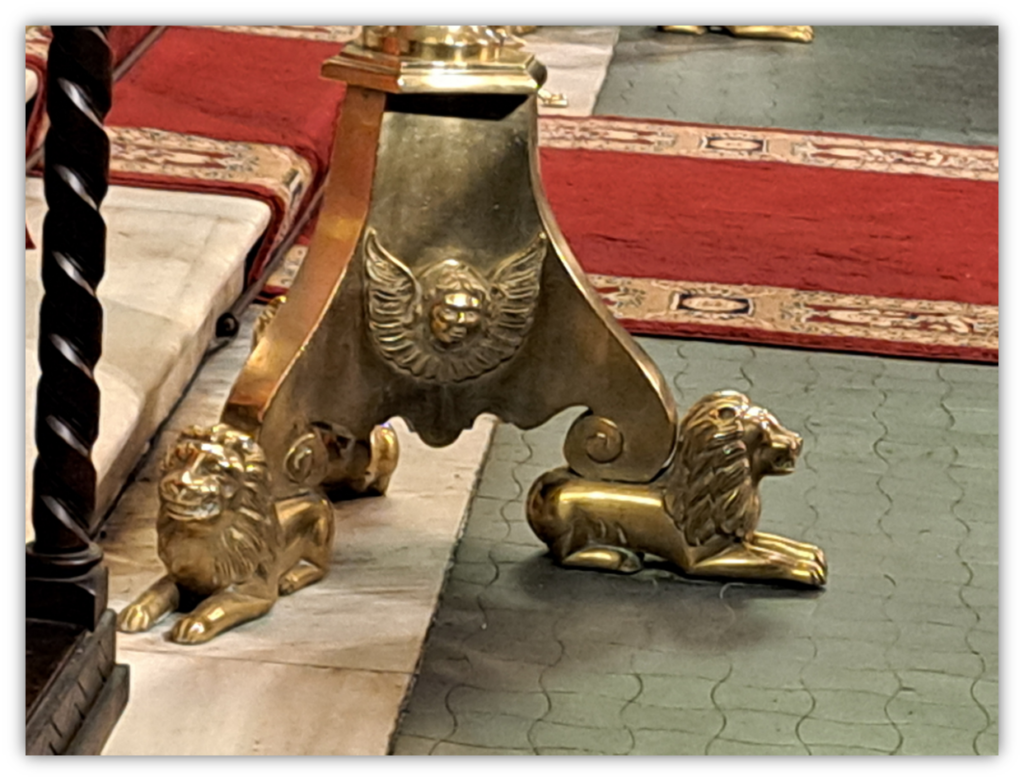
Fig.3 Candlestick base. Assumption Cathedral in Varna, Bulgaria
From a semiotic perspective, it is particularly significant that both interpretations derive from the same set of qualities. Christ and the devil alike are described through strength, authority, impressiveness, the capacity to inspire fear, and the ability to dominate surrounding space.
The distinction lies not in the qualities of the sign itself but in the spiritual orientation of those qualities. Christian semiotics thereby demonstrates that a sign possesses no fixed moral value in itself. The same symbolic potential may be directed either toward salvation or toward destruction.
The lion therefore serves as an excellent example of a reversible sign that preserves the memory of its opposing interpretations. Even when functioning as a symbol of Christ, the image retains traces of its ancient ferocity and danger. Conversely, the demonic lion continues to preserve an aura of majesty and kingship.
As a result, the symbol remains internally dynamic, alive, and multilayered. Its semiotic power arises not from univocality but from its ability to contain conflicting meanings within a single image.
7. The Skull
At the most fundamental and anthropologically universal level, the skull functions as a sign of death itself: the dissolution of individuality and the termination of earthly existence. In this sense, it belongs to the archetypal tradition of memento mori—a reminder of the inevitability of death.
The skull appearing in necropolises, catacomb culture, and medieval representations of the Dance of Death signifies the radical erasure of social status and earthly identity. It marks the boundary beyond which human existence ceases to function as a recognizable form.
Within Christian iconography, however, a fundamental semiotic redefinition of the skull occurs. It becomes identified with the “Skull of Adam”—the symbolic remains of humanity’s first ancestor, traditionally believed to have been buried beneath Golgotha.
In this context, the skull ceases to function merely as a sign of the end and becomes a sign of the beginning of a new history of salvation. Golgotha is understood as the place where the death of Adam encounters the death of Christ. According to traditional interpretations, the blood of the Savior flows down upon Adam’s skull, thereby redeeming humanity through the sacrifice of Christ.
Thus, the skull becomes integrated into the soteriological structure of Christian thought. It is transformed from a sign of death into a sign of death already overcome.
From a semiotic perspective, the skull does not simply undergo a reversal comparable to that of the cross or the spear. Rather than becoming the opposite of itself, it retains its negativity while being incorporated into a broader structure of meaning in which death is no longer interpreted as a final reality.
In other words, the skull does not cease to signify death; instead, it becomes a sign of death that has been rewritten within the logic of resurrection.
For this reason, the skull in Christian culture is almost always symbolically double-layered. It simultaneously reminds the observer of the inevitability of death and points toward its transcendence.
This dual structure is particularly evident in depictions of the Crucifixion, where Adam’s skull is placed beneath the cross. Here, the sign of death literally stands beneath the sign of life and salvation. Yet the original meaning is not abolished. Decay, mortality, and human finitude remain present, though reinterpreted.
Can the skull therefore be regarded as a dual sign?
The answer is affirmative, though with an important qualification. It does not represent a symmetrical duality such as victory and defeat, or holiness and evil. Rather, it exemplifies an asymmetrical duality in which one pole—death—is not simply opposed to life but incorporated into it as a necessary condition.
The skull therefore belongs to a distinctive category of dual signs. Its semantic structure is not founded upon opposition but upon integration. Death remains present, yet it is transformed through inclusion within a higher theological order.
Conclusion
The dual sign should not be regarded as an anomaly within semiotics, for culture itself exists through constant movement between different codes, between order and its disruption, between the stabilization of meaning and its dissolution.
It is precisely this internal instability that makes both cultural memory and the emergence of new meanings possible. The reversibility of signs functions not only as a semiotic mechanism but also as one of the essential conditions of cultural dynamism.
The selection of signs within religious, political, and artistic discourse therefore becomes an act of considerable responsibility. Symbols are never neutral. They shape collective imagination, reinforce systems of value, and establish frameworks through which reality is perceived.
Through signs, culture determines what is regarded as sacred, dangerous, heroic, or permissible. Consequently, struggles over the interpretation of symbols are ultimately struggles over the very structure of cultural consciousness and ideology.
The image of the dragon vividly demonstrates this dual nature of symbolic meaning. It is capable of preserving the memory of chaos while simultaneously functioning as a sign of its conquest; it may signify the demonic while also bearing witness to victory over it. Such ambivalence does not make the dragon an unsuccessful or contradictory symbol. On the contrary, it renders it a particularly powerful semiotic image capable of sustaining the tension of opposing meanings within itself.
The same principle applies to the lion. Its ambivalence makes it especially significant for understanding Christian culture. Christianity does not destroy ancient archetypes of strength and authority but seeks to transform and redirect them. Consequently, the lion becomes capable of expressing both divine sovereignty and destructive power, depending on the context in which it is interpreted.
An analysis of Christian symbolism shows that not all dual signs function through inversion of meaning. Some work through the integration of opposites.
The skull reveals yet another model of duality. Here negativity neither disappears nor transforms into its opposite. Instead, it is reconfigured through the Christian concept of salvation. The skull therefore embodies a form of integrative rather than conflictual duality: it preserves death within the logic of life.
From this perspective, the skull may be regarded as one of the most theologically complex symbols within Christianity. It demonstrates that Christian semiotics does not always operate through a simple reversal of meaning—from negative to positive—but frequently through the incorporation of negative meaning into a higher order in which it ceases to be ultimate.
For this reason, the skull remains simultaneously a sign of terror and a sign of hope—but a hope that becomes possible precisely because death has not been denied or erased, but acknowledged and transformed.
Unlike reversible duality, where a sign acquires a meaning opposite to its original one, integrative duality emerges when the original meaning remains active within the sign while becoming incorporated into a broader semantic and theological framework. In this case, the sign does not reverse its meaning but preserves and transforms it simultaneously.
The significance of dual signs extends far beyond the sphere of church art. In contemporary culture, struggles over symbols are, in many respects, struggles over interpretation itself. Monuments, flags, coats of arms, religious images, historical figures, and even individual words are continuously reinterpreted as societies renegotiate their collective memory and systems of values. The same symbol may function as a sign of liberation for one community and as a sign of oppression for another; as an object of veneration in one context and a source of controversy in another.
From this perspective, dual signs reveal an important feature of cultural communication: meanings are never entirely fixed but remain open to reinterpretation, contestation, and semantic transformation. The study of dual signs therefore contributes not only to our understanding of Christian visual culture but also to the analysis of contemporary cultural conflicts, identity formation, and ideological discourse. Examining how symbols preserve, transform, or reactivate previous meanings allows us to better understand the mechanisms through which societies construct historical memory, negotiate values, and shape collective worldviews.
References:
- Andrews, E., & Lotman, I. M. (2003). Conversations with Lotman: Cultural semiotics in language, literature, and cognition. University of Toronto Press.
- Atkin, Albert, “Peirce’s Theory of Signs”, The Stanford Encyclopedia of Philosophy (Spring 2023 Edition), Edward N. Zalta & Uri Nodelman (eds.), URL = <https://plato.stanford.edu/archives/spr2023/entries/peirce-semiotics/>.
- Barthes, R. (1972) Mythologies. URL: https://monoskop.org/images/8/85/Barthes_Roland_Mythologies_EN_1972.pdf (15.05.2026)
- Barthes, R. (1982). Empire of Signs (R. Howard, Trans.). New York: Hill and Wang.
- Davies, O. (2003). The sign redeemed: a study in Christian fundamental semiotics. Modern Theology, 19(2), 219-241.
- Dillon, A. (2017). Scripture and its reception: a semiotic analysis of selected graphic designs illustrating biblical lections in iconic liturgical books (Doctoral dissertation).
- Downing, C. L. (2012). Changing Signs of Truth: A Christian Introduction to the Semiotics of Communication. InterVarsity Press.
- Khlystun Yu. (2023). The Painting Program of the Orthodox Church as a Key to Understanding the Eastern Christian Picture of the World. Il programma di pittura della Chiesa ortodossa come chiave per comprendere la rappresentazione cristiana orientale del mondo. Annali di studi religiosi. № 24. P. 109–120.
- Khlystun Yu. I. The Use of Symbolic Signs in Modern Ukrainian Monumental Church Painting: Classification and Hidden Semantics. International Journal of Humanities and Social Sciences. World Academy of Science, Engineering and Technology. 2022. Vol. 188(8). P. 398–404. URL: https://publications.waset.org/pdf/10012622.
- Leone, M. (2010). Saints and signs: A semiotic reading of conversion in early modern Catholicism (Vol. 48). Walter de Gruyter.
- Leone, M. (2013). The iconography of the Giving of the Law: A semiotic overview. In Law, Culture and Visual Studies (pp. 395-419). Dordrecht: Springer Netherlands.
- Lloyd, S. S., & Torjesen, K. (2013). Sacramental Semiotics: The Language of Byzantine iconograpy, р. 12. URL: https://www.academia.edu/24467072/Sacramental_Semiotics_the_Language_of_Byzantine_Iconography (18.05.2026)
- Lomas, T. (2019). Positive semiotics. Review of General Psychology, 23(3), 359-370.
- Michael Prokurat, Alexander Golitzin, and Michael D. Peterson, (1996) “Icon,” Historical Dictionary of the Orthodox Church. (Lanham, MD: Scarecrow), 164-165.
- Onipede, F. M. (2018). A semiotic analysis of selected Nigerian church logos. International Journal of Research in Social Sciences and Humanities, 8 (1), 14-26.
- Robbins, T. (2001). Awaken the Giant Within : How to Take Immediate Control of Your Mental, Emotional, Physical and Financial Destiny. SIMON AND SCHUSTER, 256.
- Senkāne, O., & Laganovska, K. (2023, July). Visual semiotics in the study of art phenomena: symbol and symptom. In SOCIETY. INTEGRATION. EDUCATION. Proceedings of the International Scientific Conference (Vol. 2, pp. 366-377).
- Shmoop Editorial Team. (2008, November 11). Umberto Eco Quotes. Retrieved May 15, 2026, from https://www.shmoop.com/study-guides/semiotics/umberto-eco-quotes.html
- The Festal Menaion. Translated from the Original Greek by Mother Mary and Archimandrite Kallistos Ware. (1969) Faber and Faber (London), 153-154. ISBN: 978-1878997005.
- Ventsel, A. (2011). Hegemonic signification from cultural semiotics point of view. Σημειωτκή-Sign Systems Studies, 39(2-4), 58-87.